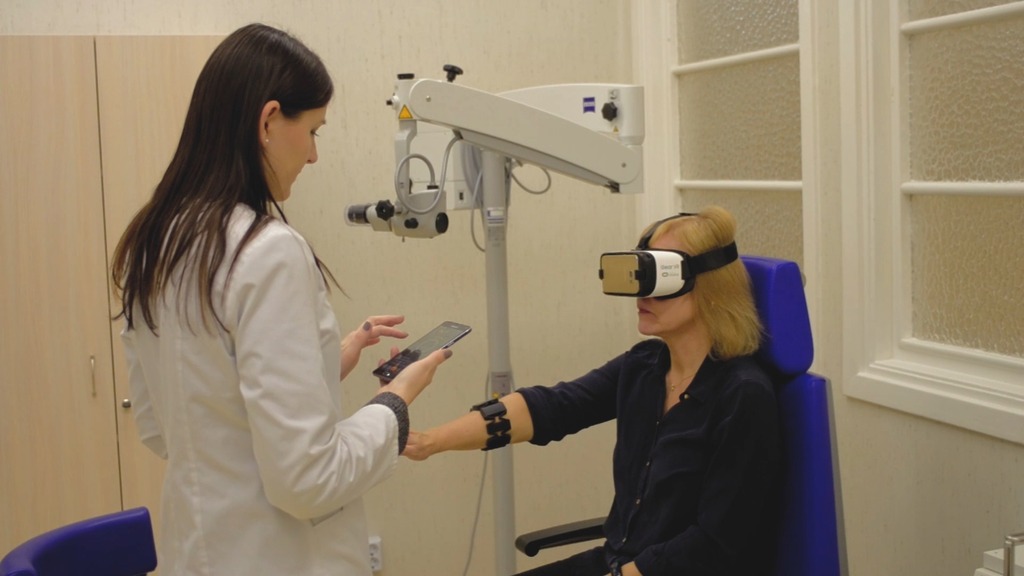
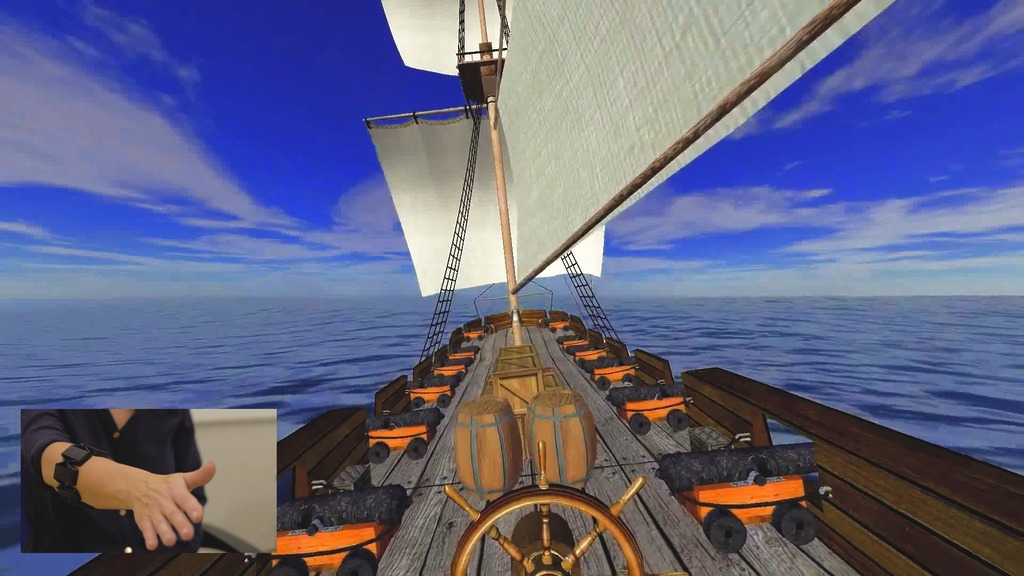
Goal – during the test, the user must align a line, rotated at any angle, to their perceived vertical. Based on the deviation from the true vertical, possible disorders are assessed.
This is a digital diagnostic system for vestibular function disorders. The system is based on the Subjective Visual Vertical (SVV) test.
The system consists of a virtual reality program for the patient, a mobile application for the doctor, and an information system for data storage. The VR program displays the visual vertical and allows it to be adjusted. The doctor’s mobile application controls the testing process and enables monitoring of the patient’s progress. Each testing session can be saved locally on the device and later uploaded to the information system. The information system stores all sessions with detailed data.
The full testing session includes three tests: static, dynamic clockwise, dynamic counterclockwise, and a real environment test. In the static test, only the visual vertical is assessed. In the dynamic tests, dynamic stimuli are presented, making it harder to determine the visual vertical. The real environment test presents the vertical as a real object within the scene.
The system supports three different input methods for the patient to manipulate the visual vertical: a dance mat, the “Myo” armband, and either the “Gear VR” or “Oculus Go” controller. The patient can choose whichever device is most comfortable.